Question: Where do you see single family home architecture evolving over the coming 5+ years?
Answers: Predicting the next evolution of single-family home architecture requires a level of architectural expertise I do not have, so I asked the team at Lee Design Studio (Architecture, Design, Planning services based in Falls Church) for their input. I highly recommend Matt and his talented team of architects and designers, they can be reached at [email protected]
Take it away Lee Design Studio…
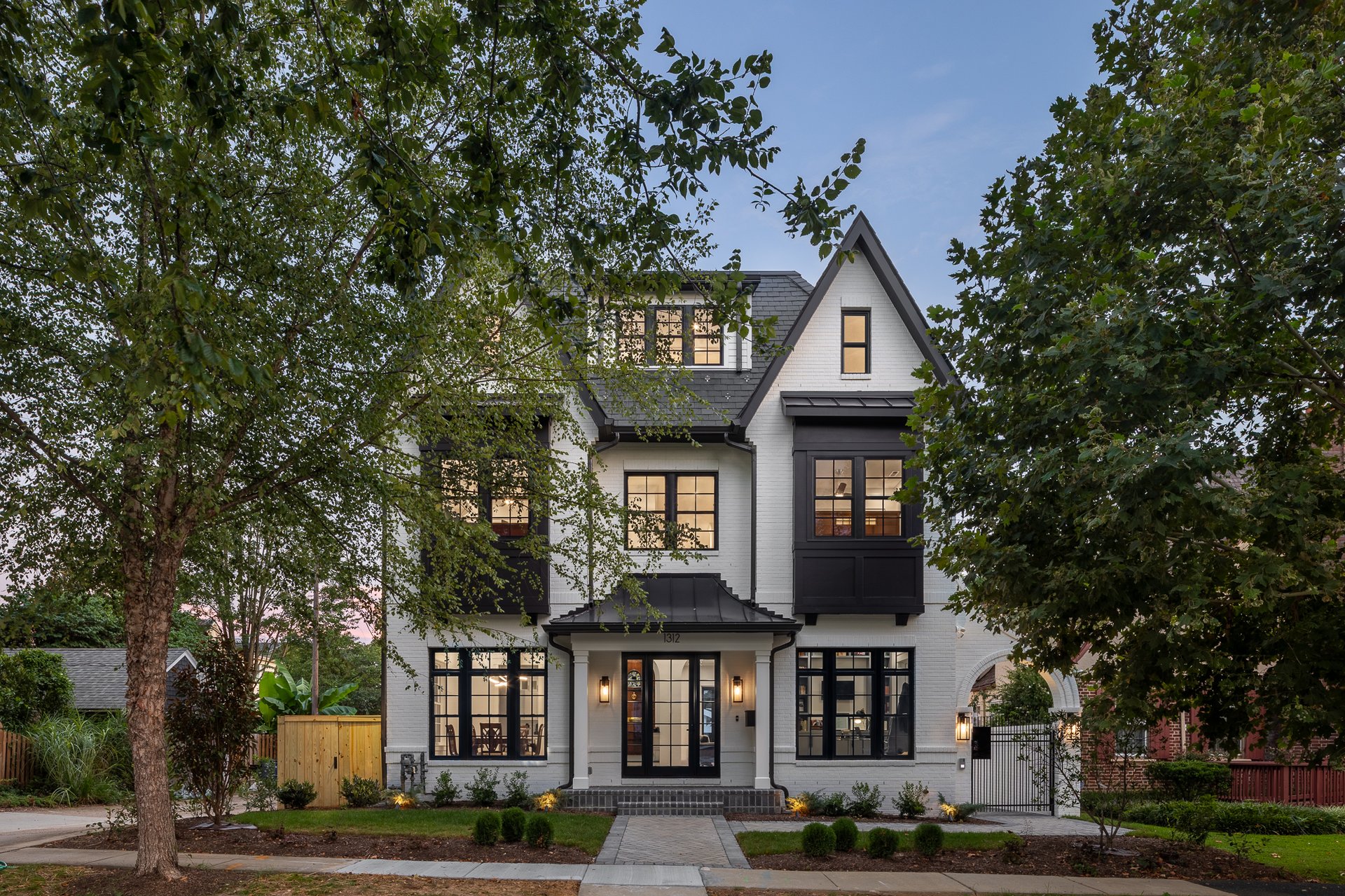
Shepherd Park Social – Lee Design Studio; Photo – Kate Wichlinski
For more than a decade, the modern farmhouse has defined the look of new single-family housing across the United States. White board-and-batten siding, black windows, simple gable roofs, and restrained detailing became the lookbook for contemporary suburban living. But architecture, like all design, evolves. As buyer preferences shift and the housing market begins to rebalance, a new design direction is emerging—one that de-emphasizes stark minimalism and prioritizes warmth, texture, and architectural character. At Lee Design Studio, we’re seeing a move away from the cool, monochromatic palette of the modern farmhouse toward homes that feel layered, tactile, and rooted in architectural tradition.
A Market Creating Space for Design
Recent housing forecasts suggest the broader market is entering a period of stabilization. The real estate industry as well as Fannie Mae all project modest home value growth and slightly increased housing inventory over the coming year, creating a more balanced environment for buyers. In highly competitive markets, design tends to take a back seat to availability. But as conditions normalize, buyers regain the ability to prioritize architecture, material quality, and long-term livability. This shift often sparks a re-evaluation of stylistic trends. After years of minimalist white exteriors and simplified massing, homeowners are increasingly drawn to houses that feel distinctive, warm, and enduring. In short, the market is ready for the next architectural evolution.
The Modern Farmhouse Is Evolving
Despite changing preferences, the modern farmhouse remains the most popular house style in America, accounting for roughly one-third of house plan sales in recent years. However, the style itself is evolving. The earliest iterations of modern farmhouse design leaned heavily on high-contrast black-and-white palettes and pared-down detailing. While visually striking, that aesthetic often produced homes that felt crisp but somewhat sterile. Today’s interpretations are becoming more nuanced with designs introducing mixed exterior materials such as brick, stone, and lap siding, warmer color palettes that move beyond bright white, more articulated rooflines and porches and greater dimensional depth in trim and façade composition. These small shifts signal a broader transition away from minimalism toward homes that feel textured and welcoming.
The Rise of the Modern Cottage
One of the clearest signals of this transition is the growing popularity of the modern cottage. Often described as the next evolution of farmhouse design, cottage-inspired homes blend traditional architectural forms with contemporary planning. Steep gables, asymmetrical massing, and smaller porch elements create a more intimate and human-scaled elevation. Unlike the rigid symmetry often associated with farmhouse design, cottage architecture embraces visual rhythm and variation. Material accents introduce richness, while layered rooflines soften the overall feel of the house. The result is a home that feels approachable, comfortable, and timeless - qualities increasingly valued by today’s buyers.
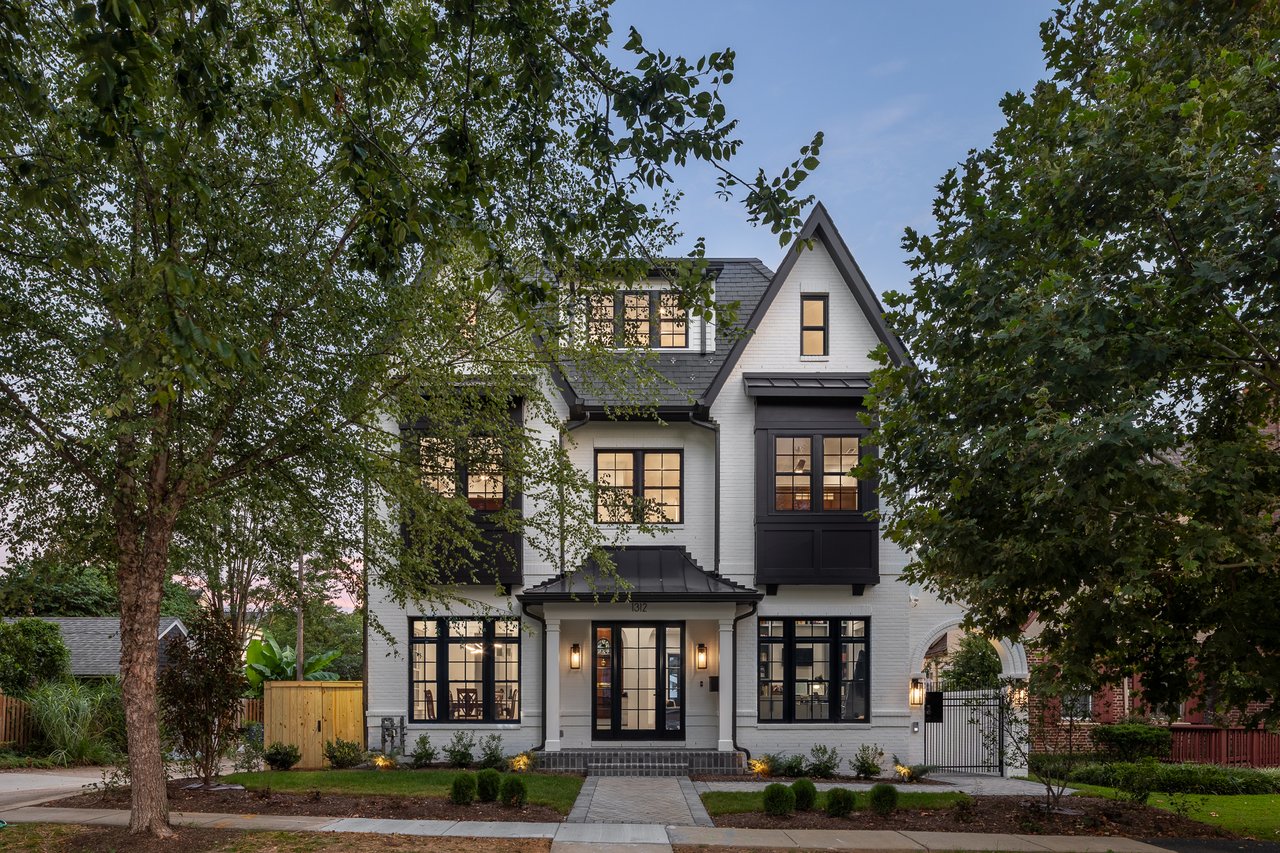
Perhaps the most compelling emerging influence is the modern Tudor. Rooted in historic English architecture, Tudor homes are known for their steep roof pitches, prominent chimneys, and distinctive façade articulation. Contemporary interpretations preserve the character of the style while simplifying its ornamental elements for modern living. Modern Tudor homes combine traditional architectural language with current space planning, often incorporating open interiors, expanded glazing, and simplified half-timber detailing. What makes this style particularly appealing today is its architectural depth. Stucco, brick, stone, and wood accents create façades with shadow lines and texture—qualities largely absent from the flat planes of minimalist design. In an era when many neighborhoods are filled with nearly identical homes, Tudor inspired architecture offers something buyers increasingly crave: character.
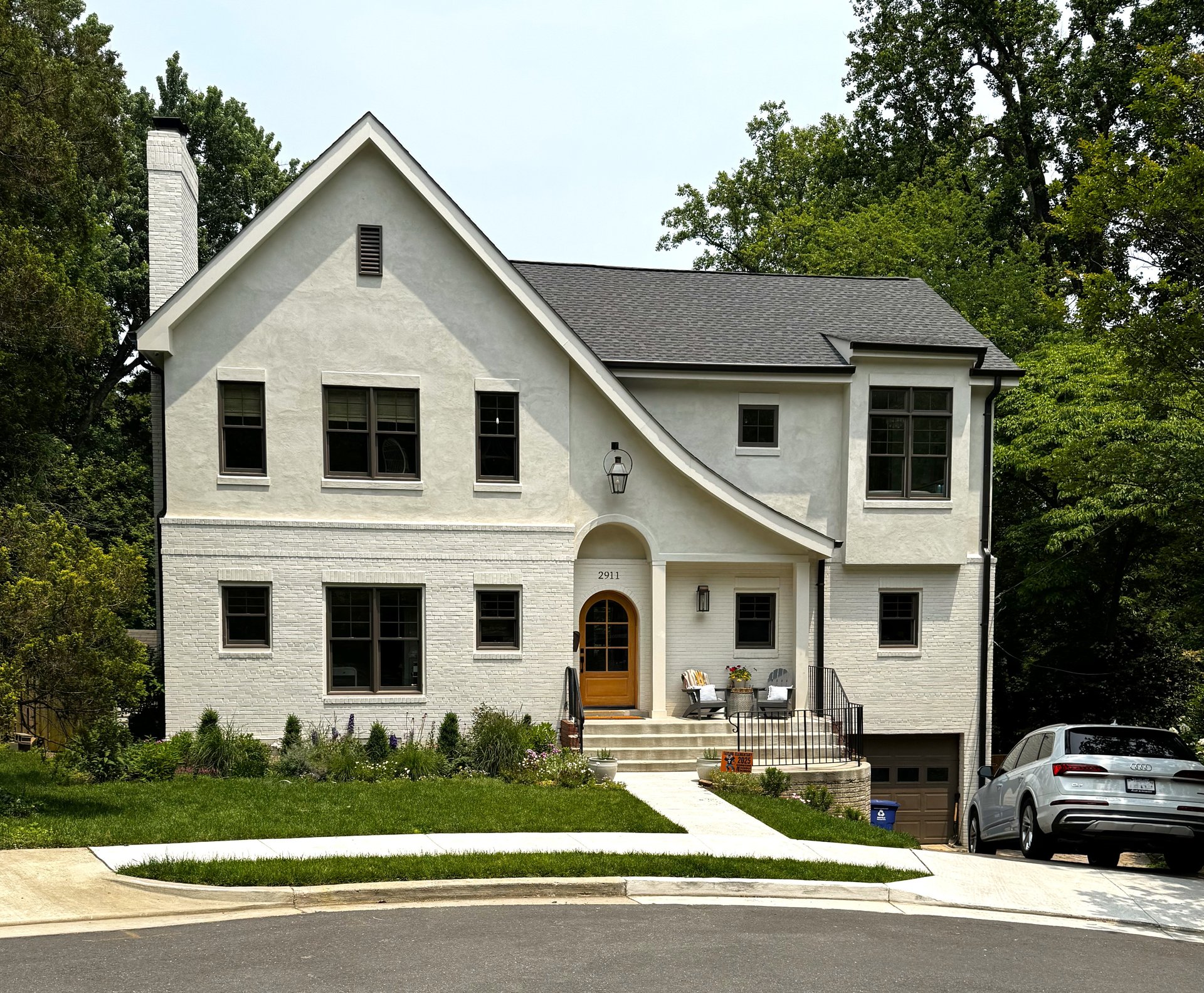
Arlington Oasis – Lee Design Studio; Photo – Lee Design Studio
Architecture That Feels Human Again
This move toward warmer, more expressive architecture reflects a broader cultural shift. After years of minimalist design dominating everything from technology to interiors, homeowners are rediscovering the appeal of spaces that feel crafted rather than manufactured. Materials play a central role in this evolution. Natural textures—wood, masonry, plaster—create depth and visual warmth that stark white exteriors struggle to achieve. Equally important is architectural form. Varied rooflines, articulated façades, and thoughtful massing produce homes that feel intentional and lasting rather than purely stylistic.
Designing the Next Generation of Homes
The future of single-family design will not abandon modern living. Open floor plans, flexible spaces, and energy-efficient construction will remain constant to residential architecture. What is changing is the architectural language that expresses those ideas. The modern farmhouse helped define the last decade of residential design. The next decade will likely be shaped by something more layered and enduring homes that combine historic inspiration with contemporary living. In other words, the future of residential architecture may feel a little less minimal—and a lot more human.
If you’d like to discuss buying, selling, investing, or renting, don’t hesitate to reach out to me at [email protected].
We have access to the most pre and off-market listings across the DMV of any brokerage and are happy to share what’s available with anybody who asks.
Below are some of our team’s pre/off-market listings, details and additional listings available by request:
-
Westover – 4BR/2BA/2,000sqft – Detached Single Family (2000) – 23rd St N Arlington VA 22205
-
Green Valley – 5BR/4.5BA/3,000sqft – Detached Single Family (2020) – 24th St S Arlington VA 22206
-
Ballston – 4BR/3.5BA/2,400sqft – Townhouse (2008) – N George Mason Dr Arlington VA 22203
-
Ballston – 4BR/3.5BA+office/4,000 sqft – Four Townhouses (2026/2027) – 11th St N Arlington VA 22201
-
Rosslyn – 2BR/2BA/1,800sqft – Condo (2021) – 1781 N Pierce St Arlington VA 22209
-
Rosslyn – 3BR/2.5BA/2,400sqft – Condo (1986) – 1530 Key Blvd Arlington VA 22209
-
Williamsburg – 6BR/5.5BA/5,500 sqft – Detached Single Family (2026) – 27th St N Arlington VA 22207
-
Yorktown – 6BR/6.5BA/6,000+ sqft – Detached Single Family (2026) – N Greencastle St Arlington VA 22207
-
West Springfield (FFX Co) – 4BR/2.5BA/2,100sqft – Detached Single Family (1971) – Riata Ct Springfield VA 22153