Question: How much of an impact do you think the ROAD to Housing Act will have on housing affordability in Arlington?
Answer: The Road to Housing Act become law ten days ago, with the stated goal of improving housing affordability in the United States.
I don’t see many policies in the Act that will improve affordability in the Arlington/Northern VA/DC Metro markets, outside of incentives for more affordable multi-family housing, but there are policies that should improve affordability in other markets that are more saturated with institutional investors that own swaths of single-family homes (e.g. Atlanta and Phoenix) and for manufactured/mobile homes.
The Local Conversation Needs to Change
If we are going to improve affordability in our market, most of the change has to be done locally/regionally, not nationally, but it requires a paradigm shift in how we discuss and solve for housing affordability.
Affordability Disconnect: Near Term Expectations Not Realistic
A disconnect between housing affordability expectations and reality prevents the right community and political conversations from happening. We expect/demand housing affordability immediately, ignoring the difficulty, and consequences, of achieving it that quickly.
Stable and healthy housing affordability is a long-term process requiring gradual change over a 10-15+ year period.
Demand-Side Solutions Won’t Work
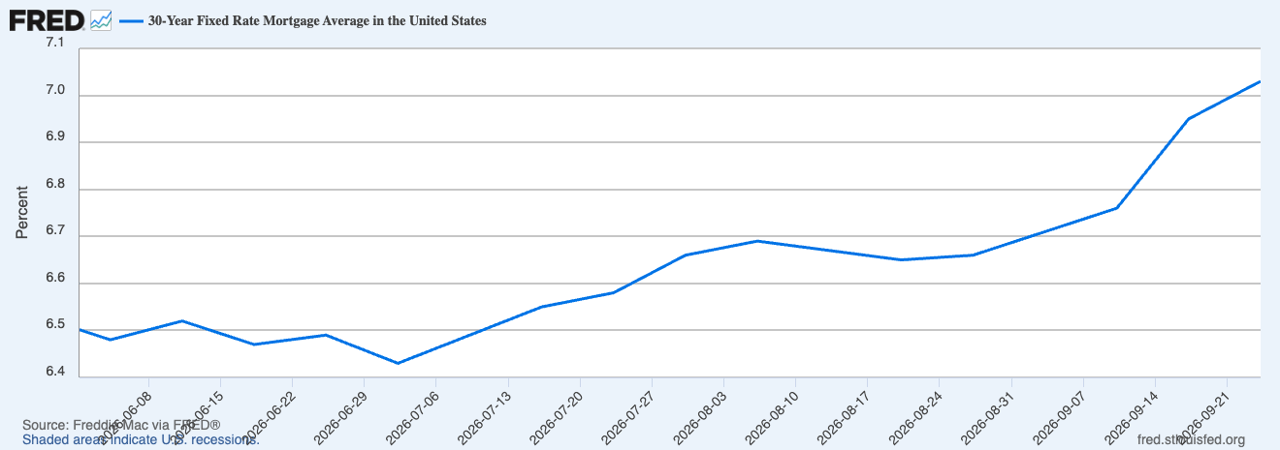
Demand-side solutions, such as lower interest rates or easier financing, artificially inflate home values, as seen during the COVID-era housing boom and early 2000s. They are not a good long-term solution to affordability because they push values even higher (along with your property taxes) and affordability gets worse when rates/lending normalize and no longer provide artificially low monthly payments.
Supply-Side Solutions Are Not Immediate
Most policy discussions focus on supply-side solutions: building more/faster and denser housing (e.g. Arlington’s Missing Middle/Expanded Housing Option), incentivizing more existing home sales, or disincentivizing concentrated ownership by companies and individuals. Econ 101 tells us that more supply = lower prices = affordable housing (winner winner!).
This is the only path to stable, long-term housing affordability...BUT, at current interest rates, prices must drop 30-35% in the United States to become affordable, at current income levels. A 30-35% drop in home values would devastate the economy, so a supply-side solution won't (shouldn't) provide immediate affordability.
Housing As a Consumable Good, Not Investment
There are excellent arguments that America has gotten housing wrong for decades by creating a scheme, via the thirty-year loan, federal (FHFA) involvement in mortgage rates, tax incentives, etc, that makes housing a critical investment vehicle (home ownership defines the American Dream) rather than a consumable good that’s valued on its utility and depreciation (e.g. a car).
Those discussions have a place in the affordability conversation, but they should be had inside academic halls about what could/should have been. America’s real estate principles are decisions of the past and cannot be undone without crippling the global economy by unraveling a $55T market (estimated value of the US residential housing market).
Like it or not, we must ease out of the system we built rather than rip ourselves from it with a drastic change in housing policy.
Achieving Healthy Housing Affordability
The unfortunate truth is that achieving immediate housing affordability will harm the housing market and the economy.
Achieving healthy affordability is a lengthy process that requires home values to grow slower than incomes for 10+ years through thoughtful supply increases and a strong underlying economy. If we get it right today, and do not freak out when housing is still unaffordable in five years, perhaps we can declare victory in 2040.
This requires long-term policy conversations/vision and for voters to allow enough time for supply-side policy changes to work. Now raise your hand if you think we have the right political climate for that...
If you’d like to discuss buying, selling, investing, or renting, don’t hesitate to reach out to me at [email protected].
We have access to the most pre and off-market listings across the DMV of any brokerage and are happy to share what’s available with anyone who asks.
Below are some of our team’s pre/off-market listings, details and additional listings available by request:
Ballston - 4BR/3.5BA/2,400 sqft – Townhouse (2008) – N George Mason Dr Arlington VA 22203
Annandale – 4BR/3.5BA/2,000 sqft – Townhouse (2003) – Aspen Hill Ct Annandale VA 22003
Pentagon City – 3BR/3.5BA/2,500 sqft – Condo (1976) – 1101 S Arlington Ridge Rd Arlington VA 22202
Bluemont/Bon Air – 4BR/3BA/1,800 sqft – Detached Single Family (1964) – 6th St N Arlington VA 22205
Ballston - 4BR/3.5BA+office/4,000 sqft – Four townhouses (2026/2027) – 11th St N Arlington VA 22201
Mclean - 5BR/4.5BA/3,700 sqft – Detached Single Family (2023) – Randolph Rd Mclean VA 22101